Best Time to Visit the Eastern Ore Mountains: Weather, Snow and Highlights Month by Month
Altenberg sits on the mountain crest, Dippoldiswalde 400 metres lower – and you notice it every day of the year. We analysed 15 years of weather data and tell you what each month is good for.
"When is the best time to come?" is the question we hear most often on the phone. The honest answer: it depends on what you want to do and which of our two houses you stay in. To make that less vague, we analysed the daily readings from two German Weather Service (DWD) stations for 2011 to 2025 and set them against what happens in the region and when.
Two altitudes, two climates
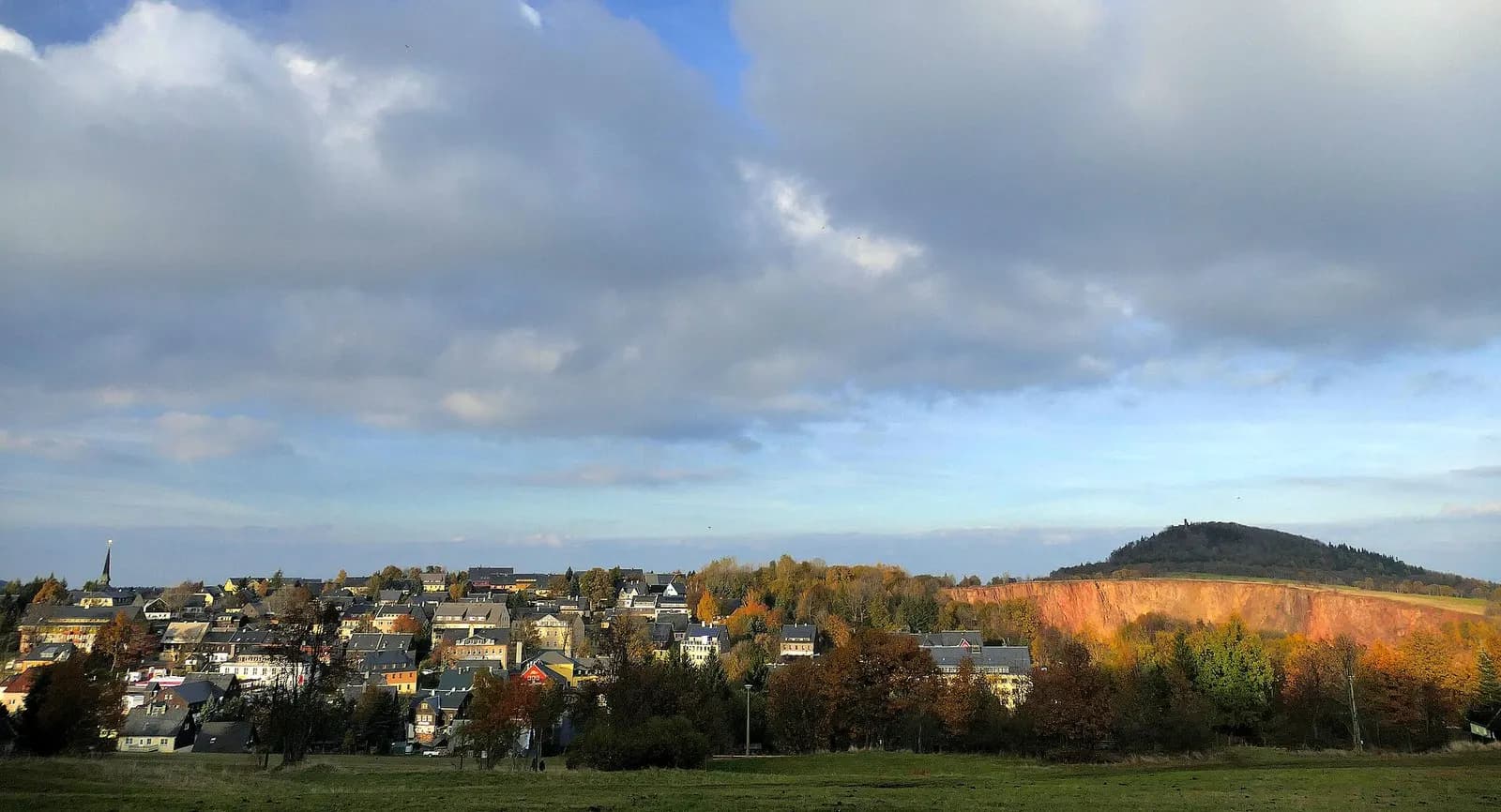
Our rooms in Altenberg are at around 750 metres, the apartments in Dippoldiswalde at around 350 metres. For Altenberg we use the Zinnwald-Georgenfeld station (877 m), a few kilometres south on the crest. It is a good 100 metres higher than the town, so Altenberg itself is slightly milder and gets slightly less snow. For Dippoldiswalde we use the Dippoldiswalde-Reinberg station (359 m) on the northern edge of town.
| Month | Crest: daytime high | Crest: night low | Crest: days with snow | Dipps: daytime high | Dipps: days with snow |
|---|---|---|---|---|---|
| January | 0 °C | −5 °C | 27 | 4 °C | 15 |
| February | 0 °C | −5 °C | 25 | 5 °C | 9 |
| March | 5 °C | −2 °C | 20 | 9 °C | 4 |
| April | 9 °C | 2 °C | 6 | 14 °C | 1 |
| May | 14 °C | 6 °C | <1 | 18 °C | 0 |
| June | 18 °C | 10 °C | 0 | 23 °C | 0 |
| July | 20 °C | 12 °C | 0 | 25 °C | 0 |
| August | 20 °C | 12 °C | 0 | 24 °C | 0 |
| September | 15 °C | 8 °C | 0 | 20 °C | 0 |
| October | 10 °C | 4 °C | <1 | 15 °C | <1 |
| November | 4 °C | 0 °C | 6 | 8 °C | 2 |
| December | 1 °C | −3 °C | 22 | 6 °C | 6 |
Averages 2011–2025, our own analysis of the freely available DWD daily data. "Days with snow" means days with at least one centimetre of snow cover in the morning.
Three things stand out. First, in high summer the crest is about five degrees cooler than Dipps; up top it only exceeds 25 °C on three or four days in July or August. Second, there is much more precipitation up top – around 1,000 millimetres a year, compared with around 700 in Dipps. The wettest months on the crest recently were January and June, closely followed by July, August and October. Third, winters are getting shorter: in the 1991–2020 period, Zinnwald still had snow on eleven days in November; over the last 15 years it was only six. Deep winter now means January to mid-March rather than starting in early December.
The year in the Eastern Ore Mountains
January and February: deep winter
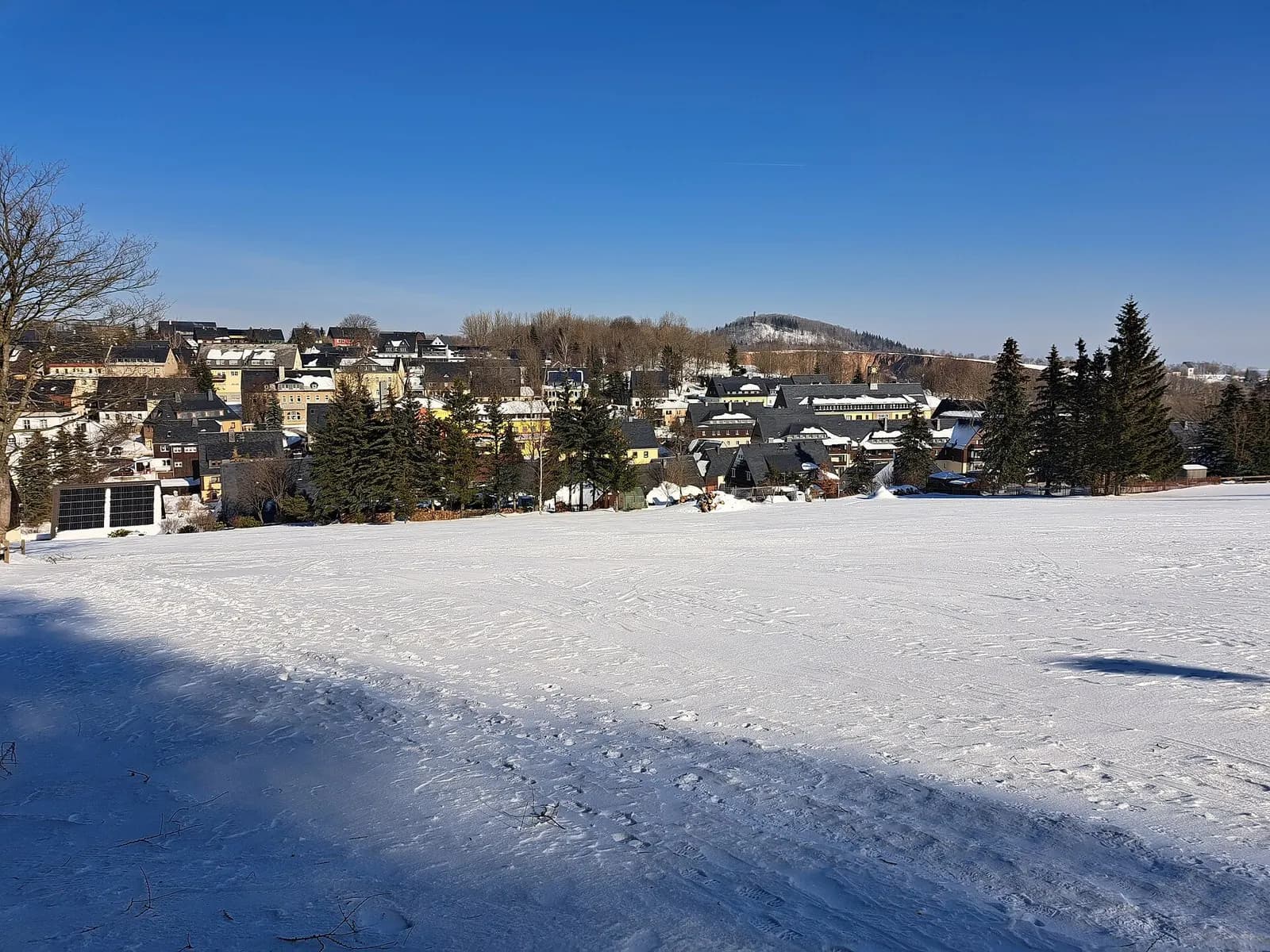
The most reliable snow months. On the crest the cross-country trails around Zinnwald and Schellerhau are usually groomed, and the ski slope at Raupennest has extra snowmaking. Daytime temperatures often stay just below zero, and hoarfrost on the spruces is typical. Short days, little sun: in January it shines for barely more than an hour a day on average.
Dates for 2027: the luge World Cup at the Eiskanal bobsleigh track is announced for 11 to 17 January 2027, followed by the Junior World Championships in skeleton (20–24 January). Check the latest details and tickets with the track operator at wia-altenberg.de.
Worth knowing: during the February school holidays and at weekends with fresh snow, lots of day visitors come up from Dresden and the surrounding area, and the car parks at the ski slope and trails can get tight. If you can come midweek, you'll have the trails almost to yourself. Everything on skiing, trails and sledging is in our article Winter holidays in Altenberg.
March and April: the slushy in-between
Up top there is often still a closed snow cover in March, on 20 days on average. From late March the paths get wet and muddy, and the ridge trails and ski tracks are neither winter nor spring. Down in the valley it is already green: in Dipps daytime highs reach 14 °C in April, and snow is rare.
Our advice: for these weeks, choose Dippoldiswalde as your base. From there Dresden, the Rabenauer Grund gorge and the Malter reservoir are snow-free, while old snow still lingers on the crest.
May and June: mountain meadows
For many, the loveliest time on the crest. In late May and June the mountain meadows on the Geisingberg flower: globeflowers, broad-leaved marsh orchids and later spignel. The Botanical Garden in Schellerhau shows alpine roses and gentians. From May the Kammweg Erzgebirge-Vogtland long-distance trail, which starts in Geising, is walkable again.
A packing note: night frosts are still possible up top in May, with average lows around 6 °C. Bring a warm jacket for the evenings. Haymaking starts from late June depending on the site. Traditionally, the Altenberg tourist office holds a hiking festival on 1 May.
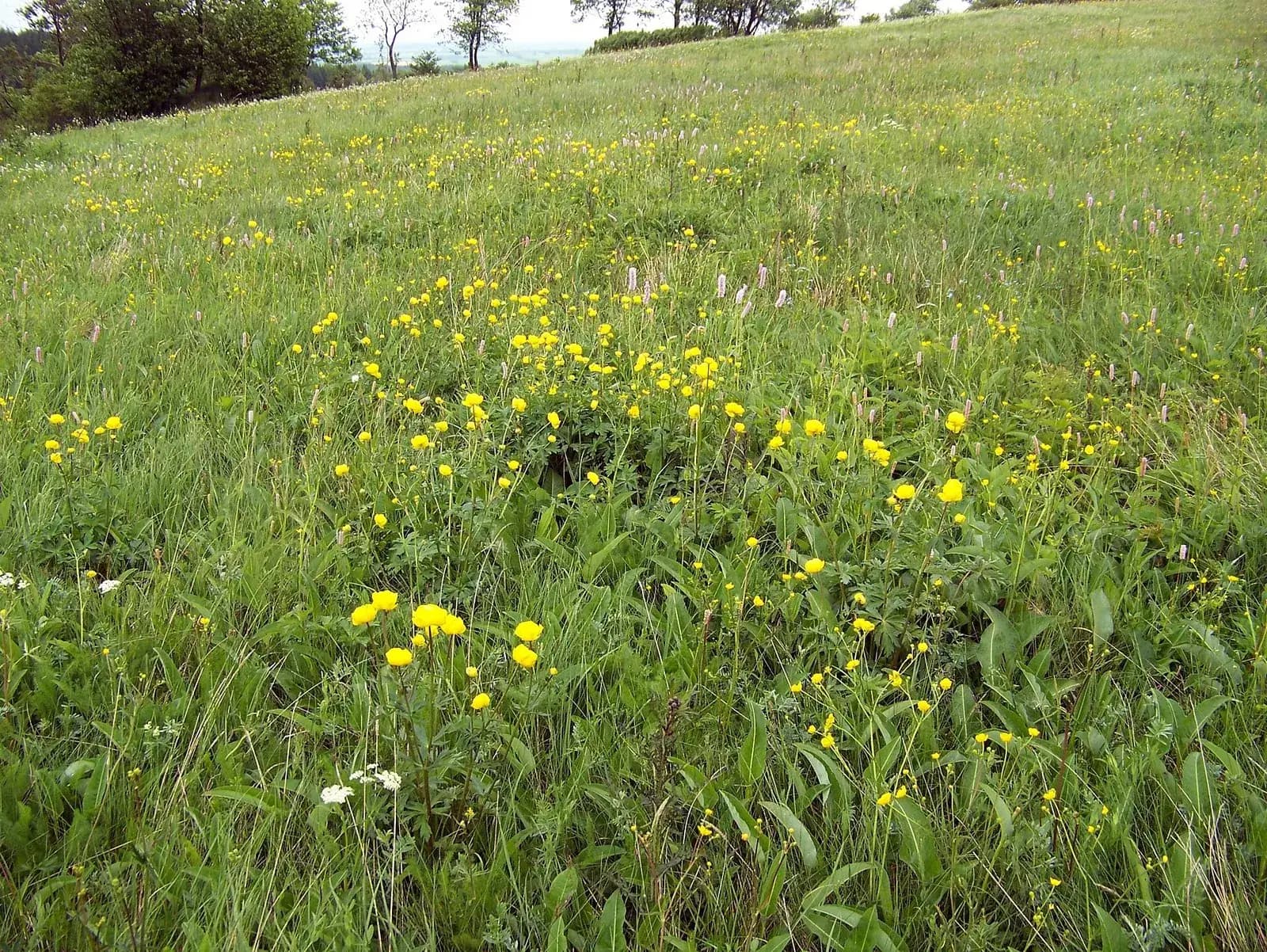
July and August: summer retreat
While Dresden hits 30 °C on some days, average daytime highs on the crest stay just below 20 °C. It is also thunderstorm season, though, and July and August are among the wetter months up top. Plan long hikes for the morning.
For swimming, Dipps is much better placed. It averages 14 summer days above 25 °C in July, and the Malter reservoir with its bathing areas is just outside town. Our article Swimming in the Eastern Ore Mountains gives an overview of natural pools and outdoor baths.
September and October: long views and mushrooms
The months with the clearest views. After the first cool nights the air is clear, and on good days the view from the Geisingberg and Kahleberg reaches as far as Saxon Switzerland. The rowan trees – the signature tree of the Ore Mountains – carry red berries, and from late September the deciduous trees in the valleys change colour. When and where to find mushrooms, and what is allowed, is in our guide Picking mushrooms and berries.
During the Saxon autumn school holidays, the tourist office runs a hiking week with guided walks; in 2026 it ran from 16 to 25 October, with walks around the Pinge, through the moor and in search of mushrooms (programme on altenberg.de, in German). The first snow can fall up top in late October, but it rarely stays.
November: the quiet month
Honestly, the trickiest month. On average the sun shines for little more than an hour a day, fog often hangs over the crest, and snow is still the exception. The Weißeritztalbahn steam railway doesn't run at all from 2 to 20 November 2026 because of maintenance work.
In return it is quiet, and things liven up at the end of the month: the IBSF bobsleigh and skeleton World Cup is scheduled for 23 to 29 November 2026. On the first weekend of Advent (28 and 29 November 2026) the Weißeritztalbahn runs a special timetable for "Bimmelbahn & Lichterglanz", with small Christmas markets at the stations.
December: Advent in the Ore Mountains
Candle arches (Schwibbögen) in the windows, Christmas pyramids in the market squares, Christmas markets at the Advent weekends – December is the time the Ore Mountains are famous for. Which markets there are between Altenberg and Dippoldiswalde, and when, is collected in Advent in the Eastern Ore Mountains. Up top there is snow on the ground on just over 20 days in December. And a white Christmas? At the Zinnwald station there was snow on 24 December in 8 of the 14 recorded years since 2011; in Dippoldiswalde in only one of 15.
When it gets busy and when it's quiet
- Busiest: winter weekends with fresh snow, the February school holidays, the Advent weekends and World Cup days. The roads up to Altenberg are busy then too.
- Quiet with good weather: early to mid-June (except at Whitsun/Pentecost), and September outside weekends.
- Quiet with poorer weather: November before the World Cup, and late March to mid-April.
If you are flexible and travelling with children, the weeks right after the Saxon summer holidays are a good compromise: still warm, but the attractions are emptier again.
In short: which month for what
| Plan | Best time | Better base |
|---|---|---|
| Downhill and cross-country skiing | January to early March | Altenberg |
| Meadow flowers, Botanical Garden | late May to late June | Altenberg |
| Swimming, Malter reservoir | July and August | Dippoldiswalde |
| Hiking with long views | September and October | either |
| Hiking the Rabenauer Grund, back by steam train | April to October | Dippoldiswalde |
| Advent and Christmas markets | late November to December | either |
| Quiet trips to Dresden | all year | Dippoldiswalde |
For the differences between our two houses in detail, read Altenberg or Dippoldiswalde?. How to get here in every season, including winter tyres and snow chains, is covered in Getting to the Eastern Ore Mountains.
Staying with us, whatever the season
In Altenberg we rent eight rooms with their own bathroom and toilet, seven for up to two guests and one for up to three; in Dippoldiswalde two apartments with a kitchen and washing machine for up to four and five guests respectively. Both from €70 per night, booked directly with us by phone or WhatsApp on +49 1514 1213283 or +49 1525 1644356. Coming with several families or a club? See Group trips to the Eastern Ore Mountains.
Frequently asked questions
When is snow most reliable in Altenberg?
In January and February. At the Zinnwald-Georgenfeld weather station there was snow on the ground on an average of 27 days in January and 25 days in February between 2011 and 2025. There is still no guarantee – some winters are much weaker.
Is November a good month to visit the Eastern Ore Mountains?
For peace and quiet, yes; for hikes with views, less so. With barely more than one hour of sunshine a day, November is one of the darkest months, it is often foggy, and snow rarely settles. On the other hand, paths and accommodation are quiet, and at the end of the month the World Cup and Advent season begin.
How warm does it get in Altenberg in summer?
Rarely hot. In July and August daytime highs on the crest average just under 20 °C, and it only goes above 25 °C on three or four days a month. In Dippoldiswalde, July has an average of 14 such summer days.