Exploring Dippoldiswalde: Castle, MiBERZ Mining Museum, Tannery Museum and Old Town
A walk through Dipps, as locals call it: from an award-winning museum to a castle full of 800-year-old mining finds and a Romanesque cemetery church. Everything is so close together that half a day is enough.
Dippoldiswalde has just under 14,000 inhabitants, two museums, one of which won the main prize of the Saxon Museum Award in 2023, and medieval mines from the 12th century beneath its old town. Even so, many people only know it as a stop on the steam railway. The town is easy to explore on foot: from our apartments on Bahnhofstraße to the castle takes less than ten minutes. We describe the walk the way we would sketch it on a map for guests, with rough walking times from our front door.
A walk in six stops
1. Weißeritztalbahn station (3 minutes)
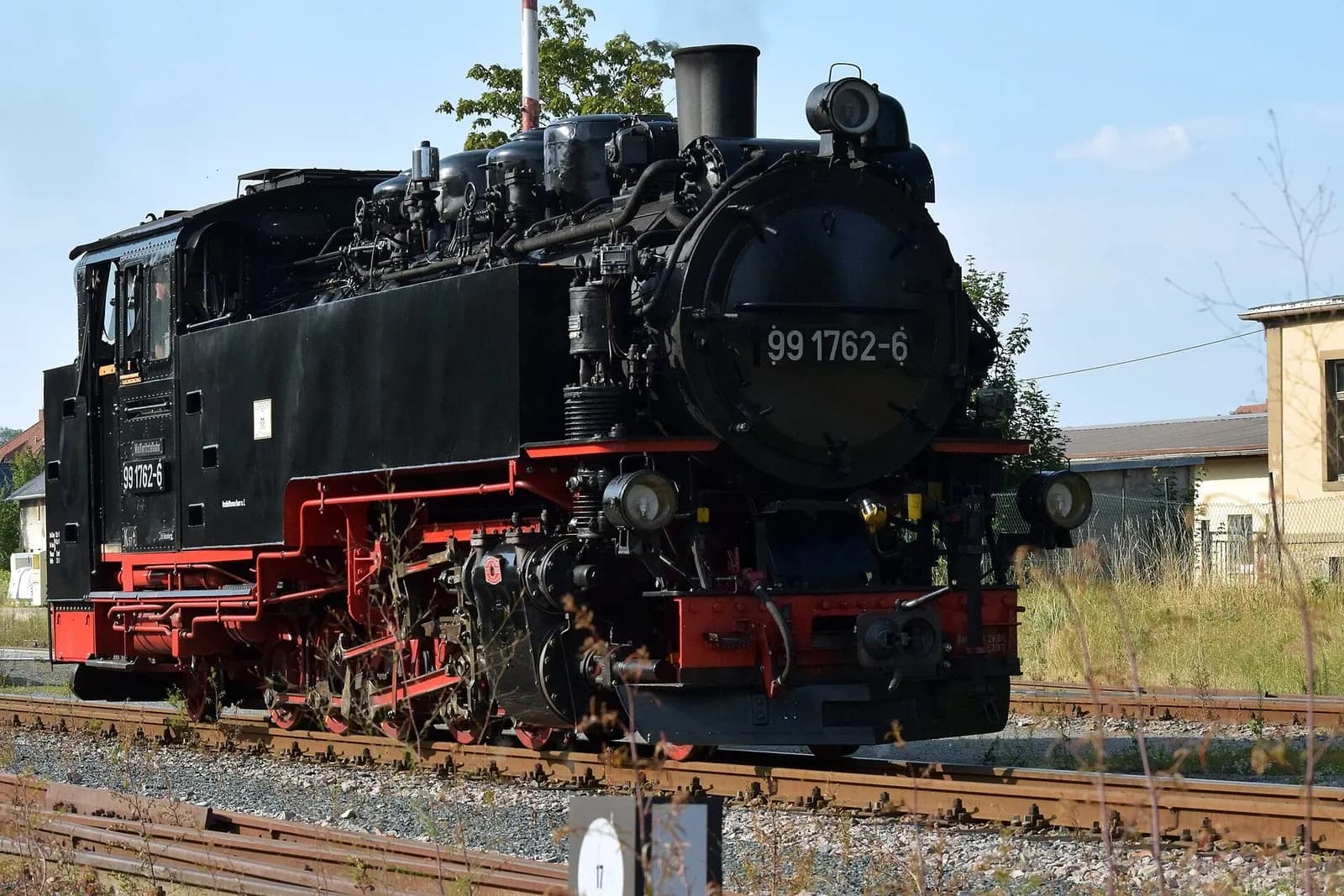
A good place to start even if you're not riding. Twice a day the steam locomotive stops here on its way to Kipsdorf to take on water. Times are in our article on the Weißeritztalbahn. The station also has the Bimmelbahnshop, the railway's small shop.
2. LOHGERBER MUSEUM & GALERIE (3 minutes)
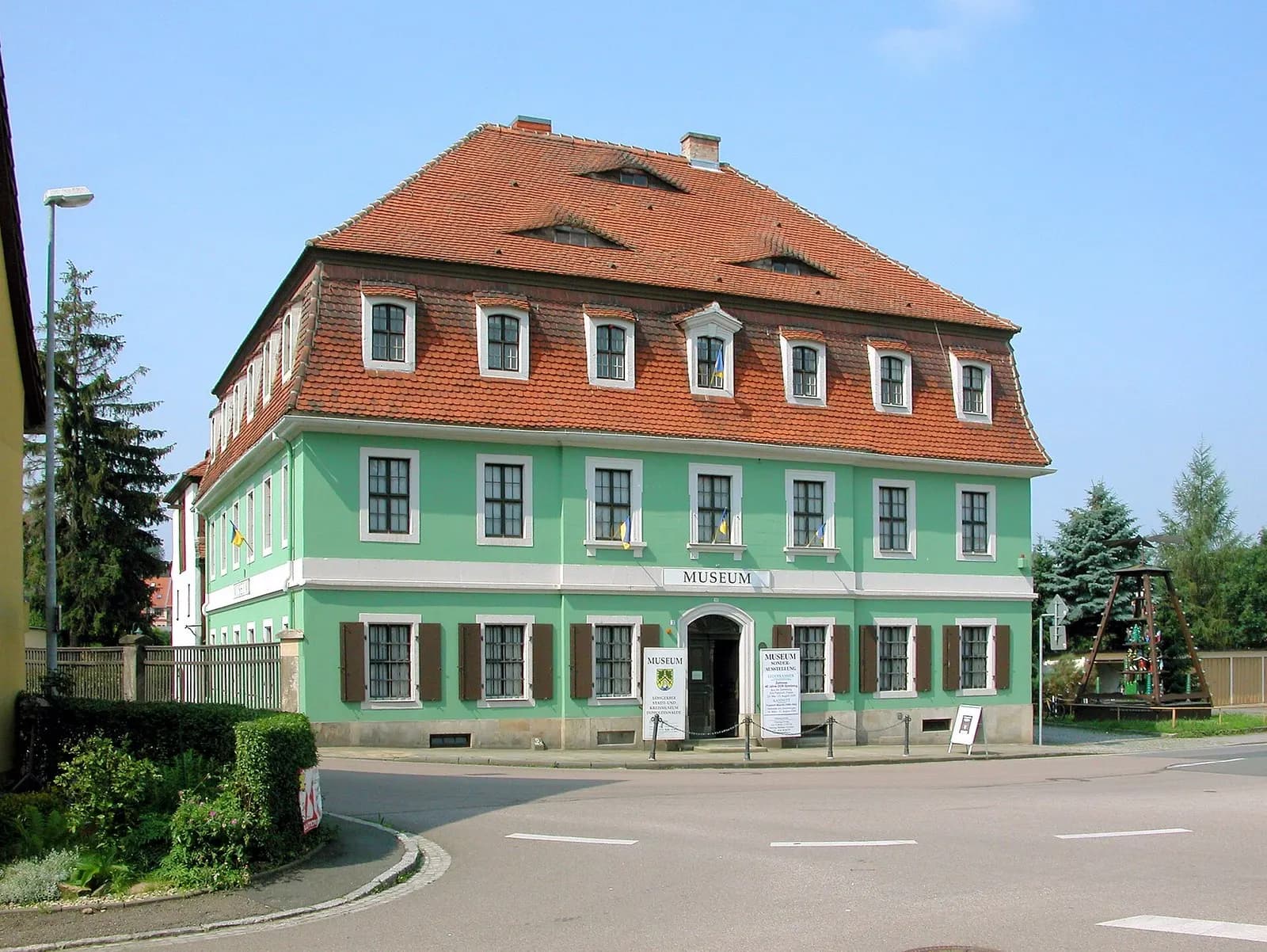
At Freiberger Straße 18, on the corner of Altenberger Straße, stands a tannery from around 1750: the Baroque house of the Ulbrich family of tanners, a three-storey workshop and a connecting building. ("Lohgerber" means bark tanner.) After dry rot was found, the museum closed from October 2018 to March 2022 for a thorough restoration. In November 2023 it received the main Saxon Museum Award, worth €20,000.
The centrepiece is the original tannery workshop with its water room, finishing room and journeyman's chamber. Hides were tanned with "Lohe", crushed tree bark, in a craft that needed a lot of water and a lot of time, and the workshop lets you follow each step. In the house you see the family's restored rooms with Neoclassical wall paintings, and the attic floor holds art from the Eastern Ore Mountains, including works by Curt Querner and Heribert Fischer-Geising.
Children from six can do the "ArchitekturSpur" treasure hunt with 16 hidden letters, and the leather room has an open craft workshop. The building is fully accessible, with free parking behind the museum (enter from Alte Altenberger Straße via Am Mühlgraben).
3. Market square and town hall (7 minutes)
From the museum it's uphill into the old town. The market square keeps its medieval layout, and the core of the town hall dates from the second half of the 15th century. Look at the sandstone doorways, one of them with stone seat niches either side of the door. The town's tourism office is also in the town hall (Markt 2).
4. Castle and MiBERZ (9 minutes)
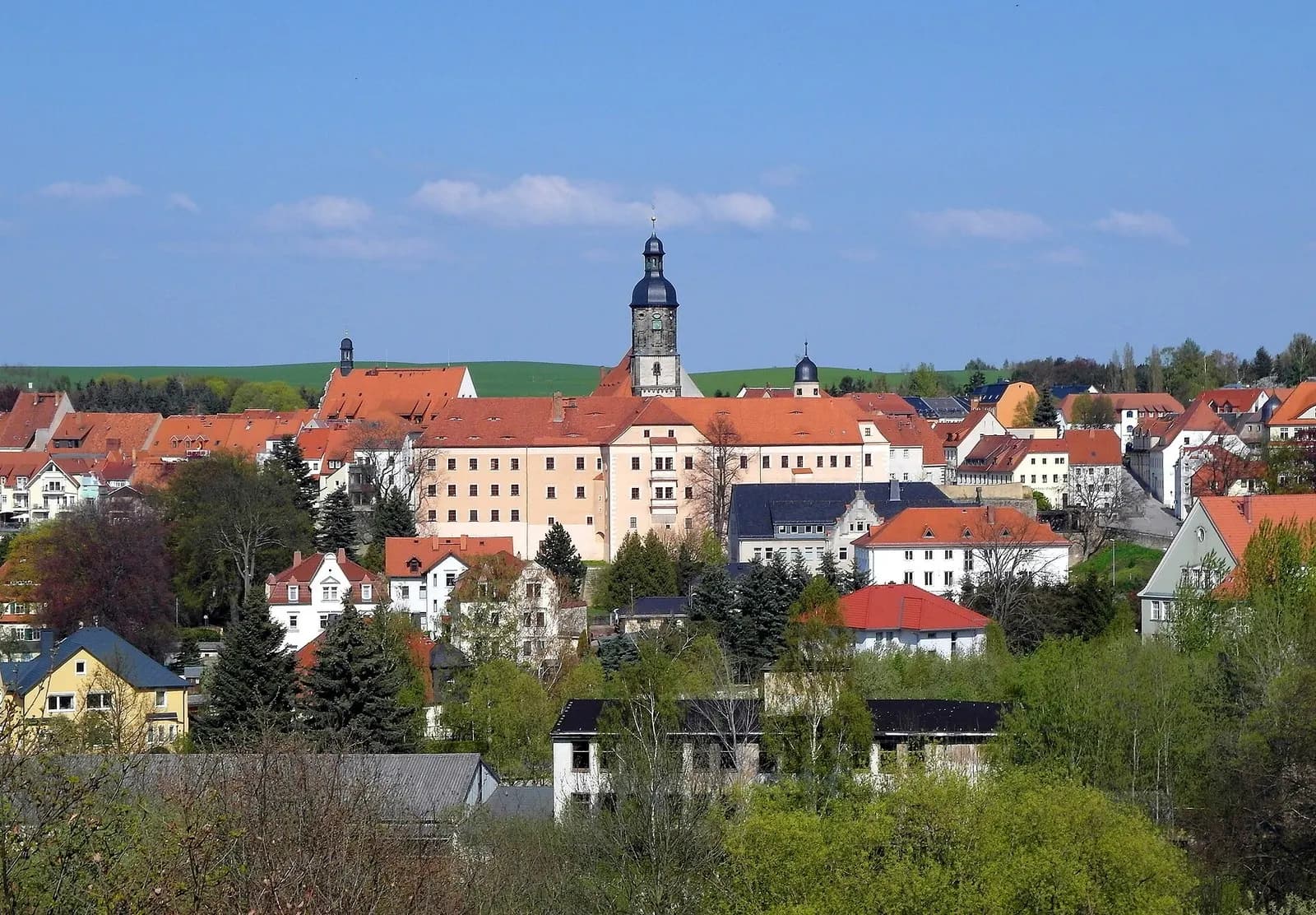
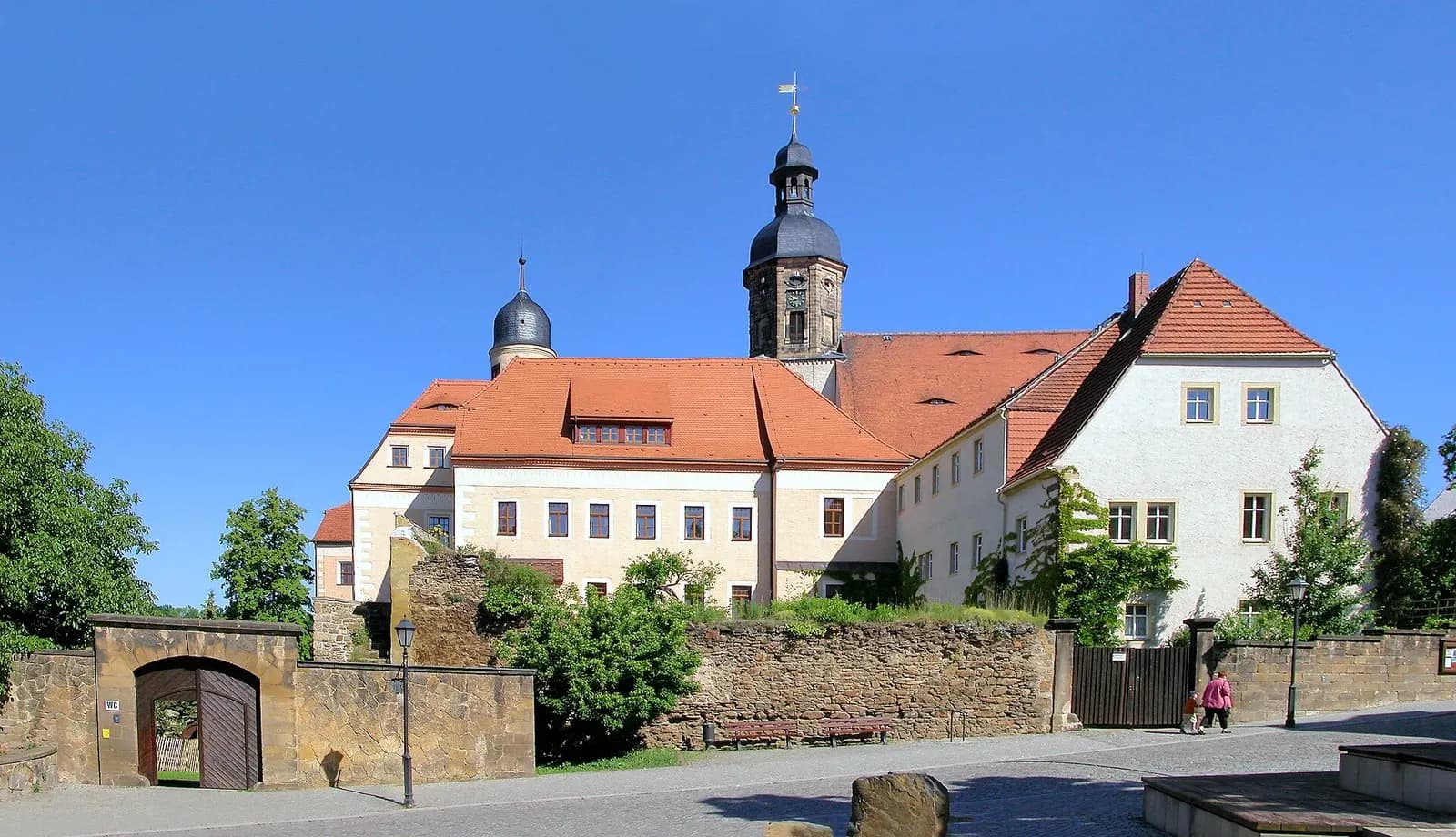
Through the lanes behind the market you reach Kirchplatz. The castle began as a hilltop fortress of the Margraves of Meissen above the valley of the Rote Weißeritz, partly to protect the mines. The first recorded owner, in 1266, was the knight von Clomen. It burned down in the Hussite Wars in 1429, and from 1503 the lords of Maltitz rebuilt it in Renaissance style. On the courtyard side you can see the pilastered façade by the Nuremberg master builder Peter Flötner, with reliefs of dolphins, foliage and princely heads. Today the castle also houses the local court.
Since 2018, six vaulted rooms on the lower floor have held the Museum für mittelalterlichen Bergbau im Erzgebirge (MiBERZ), the museum of medieval mining in the Ore Mountains. It shows finds from the high medieval silver mines directly beneath the town: equipment and techniques used to mine and process silver ore, more than 800 years old and remarkably well preserved. With a VR headset you can dig ore in a medieval tunnel yourself. Since 2019 these mines have been part of the UNESCO World Heritage Site Erzgebirge/Krušnohoří Mining Region, as its oldest component. Labels are in German and Czech. An honest note: the vaulted rooms are not wheelchair accessible.
5. Town church of St Mary and St Laurence (next door)
Right beside the castle stands the town church, a Gothic hall church with a Romanesque west tower and early Baroque furnishings. You can see its tower from far off above the rooftops.
6. St Nicholas church in the lower town (a bit further)
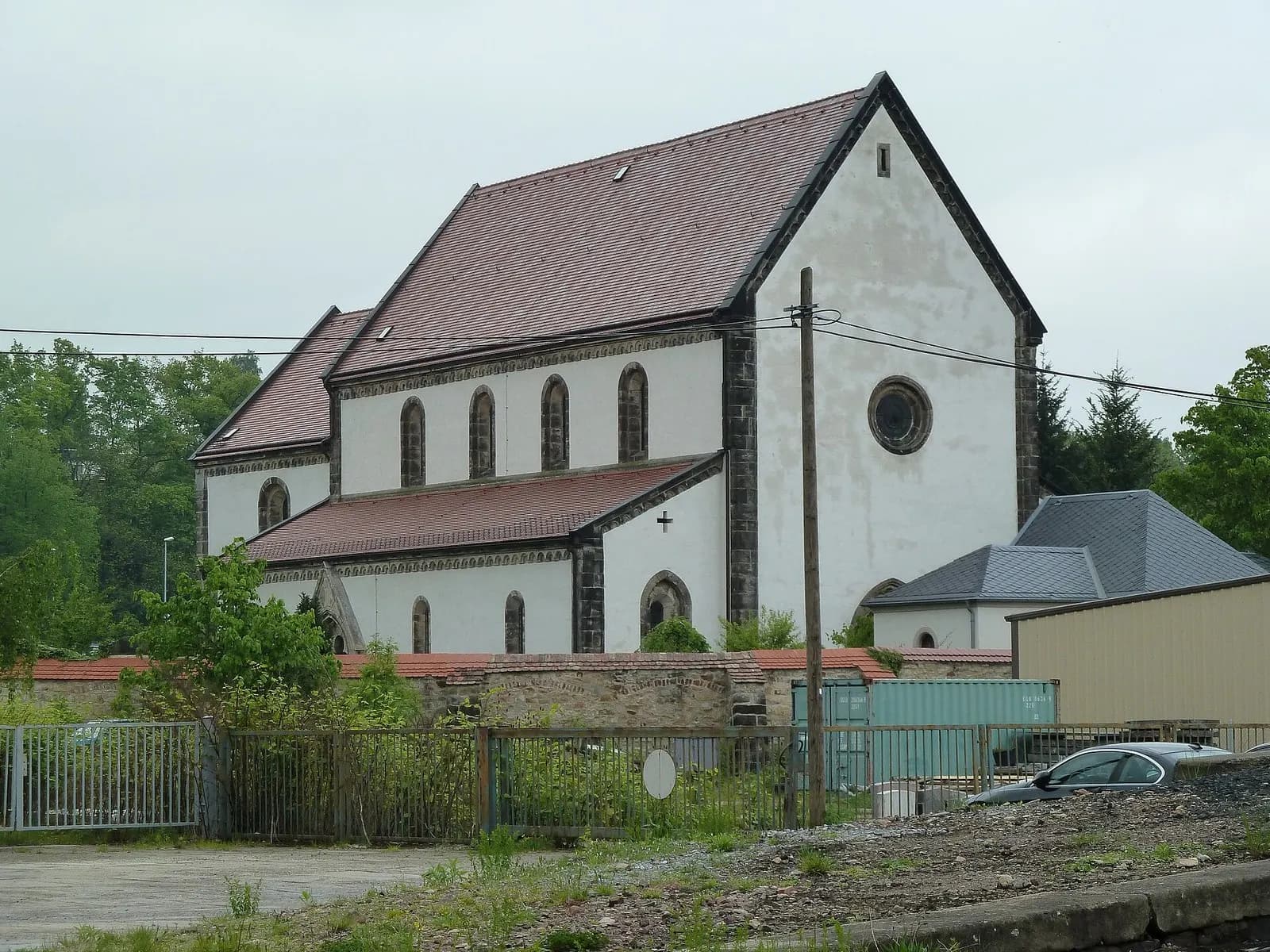
If you still have energy, walk down to the cemetery in the lower town. There stands the Nikolaikirche, built in the first half of the 13th century as a three-aisled late Romanesque basilica without a tower. It is older than almost anything else in town and has hardly changed. Inside are wall paintings from the 13th and 14th centuries and a late Gothic carved altar. It serves as the cemetery church; ask the Protestant parish whether and when it is open.
The two museums at a glance
| LOHGERBER MUSEUM & GALERIE | MiBERZ in the castle | |
|---|---|---|
| Address | Freiberger Straße 18 | Kirchplatz 8 |
| Subject | Tanning, town history, regional art | Medieval silver mining under the town |
| Opening hours | Tue–Sun and holidays 10:00–17:00 | Tue–Sun and holidays 10:00–17:00 |
| Closed | Mondays, 24 and 31 December | Mondays, 24 and 31 December |
| Accessible | yes | no |
| Time needed (our estimate) | 1–1.5 hours | about 1 hour |
A combined ticket covers both museums, €10 for adults (as of October 2026). Children under seven go free. Current prices and special exhibitions are on the website of the Städtische Museen Dippoldiswalde (the town museums, in German).
Mining history on foot: the trail
What sits in the MiBERZ display cases was dug up at specific spots in town. Since 2018 the Bergbaulehrpfad (mining trail) has linked six of these sites where archaeologists worked. Start at the museum, where you can also pick up the leaflet. The local mining heritage association offers guided walks on request; contact details are on the association's trail page (in German).
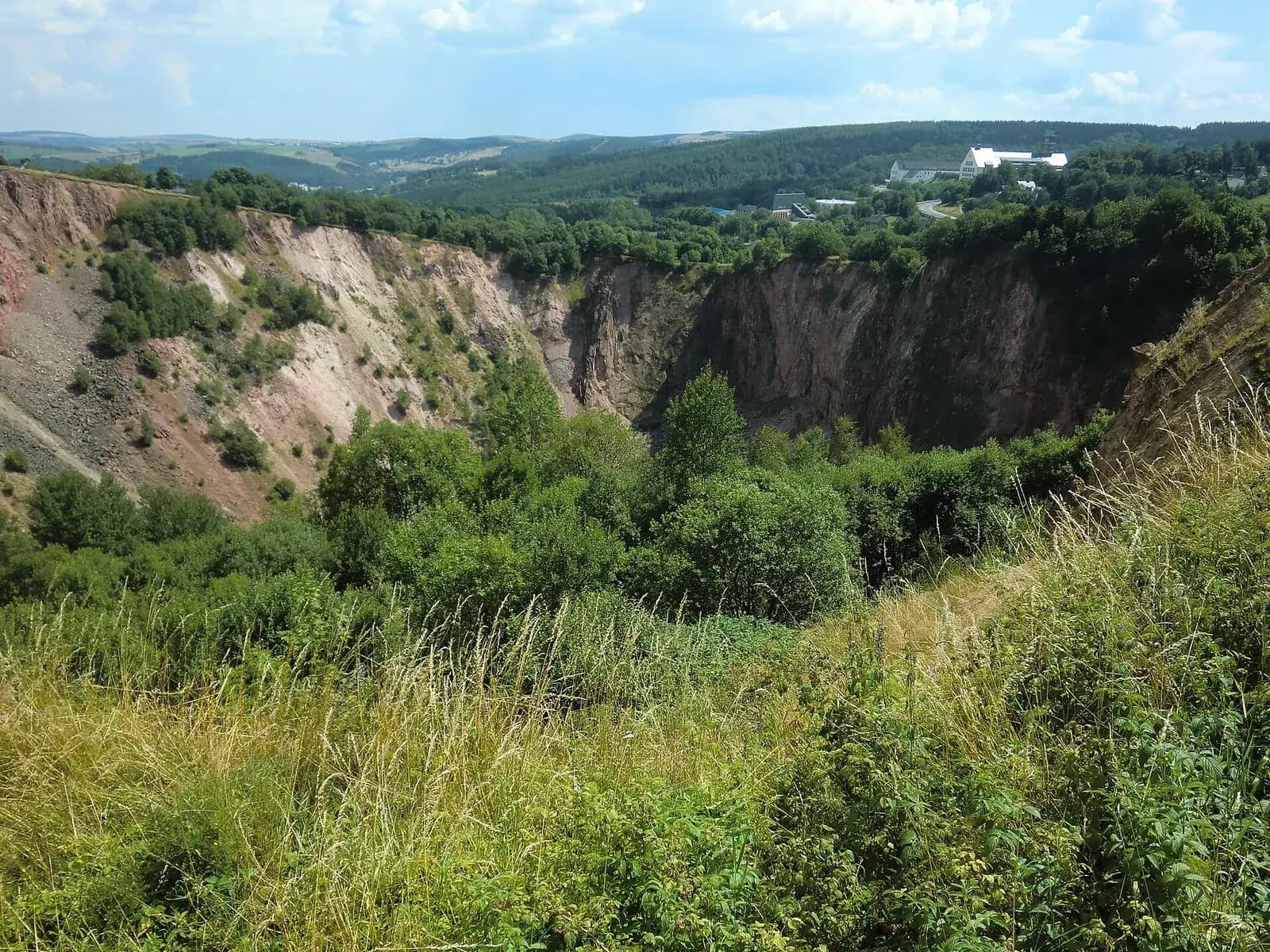
If that gives you a taste for the later mining higher up in the mountains: tin mining in Altenberg, with its huge collapse crater and show mine, is a quite different chapter, covered in Mining in Altenberg.
With a local guide
The town lists several guides: a walk with the legendary town founder "Dippold", tours with the night watchman, themed walks around Reichstädt and guided walks along the mining trail. There aren't always fixed dates; you arrange the tour directly. Names and phone numbers are on the town's guided tours page. If you need a tour in English, ask when you book.
Out of town: the Dippoldiswalder Heide
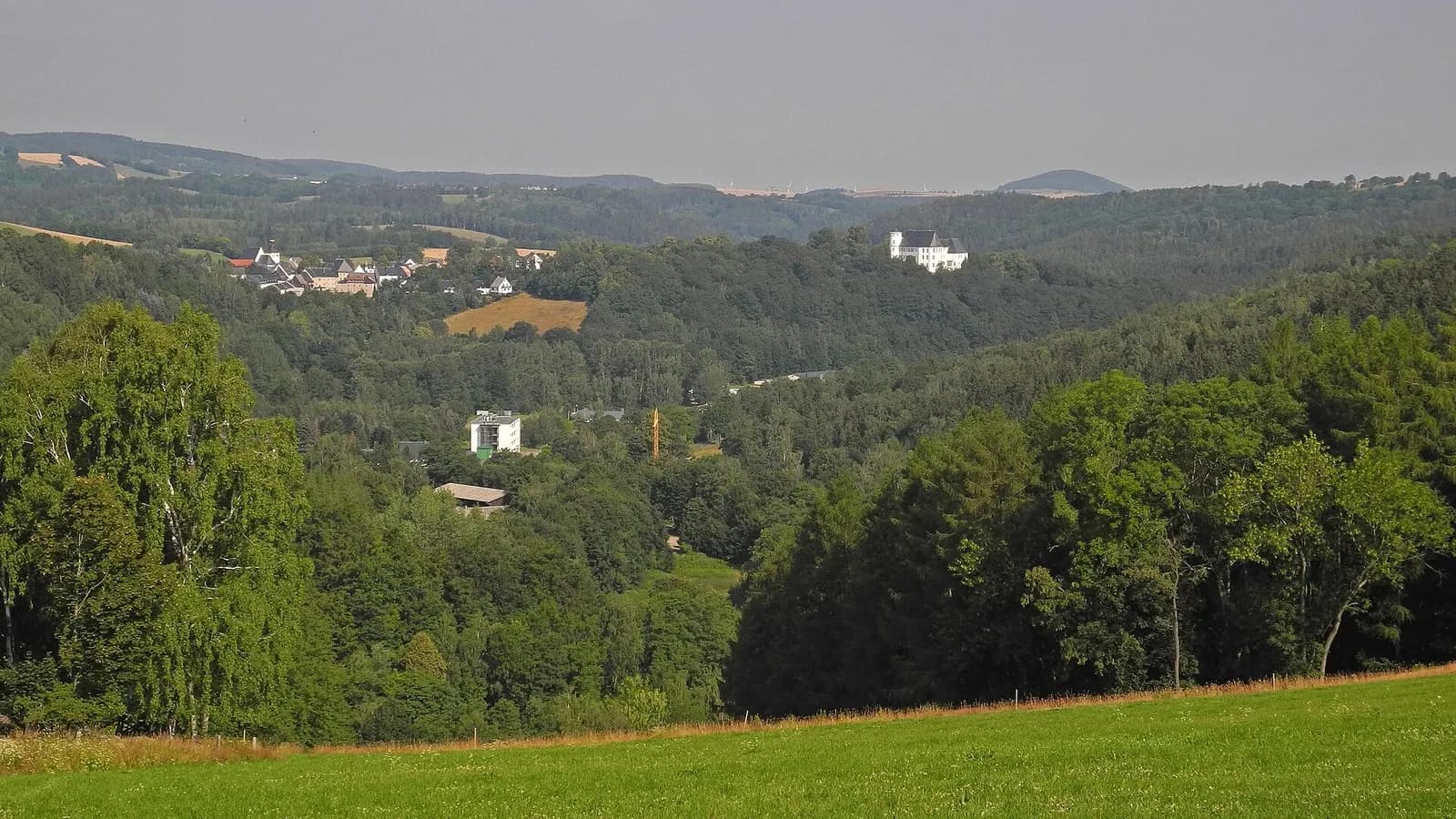
North of town begins the Dippoldiswalder Heide, a hilly forest of about 12 square kilometres between 310 and 411 metres above sea level. It is a protected landscape and borders the Malter reservoir to the south-west. A few places to aim for:
- Einsiedlerstein: a sandstone rock about ten metres high, linked to the legend of the hermit Dippold.
- Wolfssäule: a monument about two metres tall to a wolf killed here in 1802. It lies on the waymarked path from Malter to Dippoldiswalde.
- König-Johann-Turm: a 20-metre lookout tower built in 1885/86.
- Barbarakapelle: the chapel dedicated to St Barbara, patron saint of miners, was built in 1507 and destroyed as early as 1530.
A shorter option right on the edge of town is the Historischer Rundwanderweg Berreuth: seven kilometres, about two hours, partly along an old pilgrims' path in honour of St Benno, past the Schwarzer Teich pond and a sawmill dating from 1790.
If it rains or you have more time
Both museums make good rainy-day trips; more ideas are in The Eastern Ore Mountains in the rain. The Kulturzentrum Parksäle puts on theatre, concerts and cabaret through the year. And if you want to explore further, our overview of day trips in the Eastern Ore Mountains covers places up to Altenberg and across into the Czech Republic.
Staying right in town
Our two apartments in Dippoldiswalde are at Bahnhofstraße 15, a three-minute walk from the tannery museum and the station. One sleeps up to four and the other up to five guests, both with their own kitchen and washing machine. Prices start at €70 per apartment per night.
For free dates, contact us directly by phone or WhatsApp on +49 1514 1213283 or +49 1525 1644356.
Frequently asked questions
Why is Dippoldiswalde also called Dipps?
"Dipps" is the common short form of the town's name. The town itself and local guides use it too, for example in the guided walk "Mit dem Dippold durch Dipps" (with Dippold through Dipps).
How old is Dippoldiswalde?
The town is first mentioned in a document on 11 June 1218. Legend traces the name to a hermit called Dippold who is said to have lived in the Dippoldiswalder Heide forest around the year 800. The oldest dated mine timbers from beneath the town are from 1158.
Where can I get tourist information in Dippoldiswalde?
The town's tourism office is in the town hall at Markt 2, phone +49 3504 64990. Leaflets for the mining trail are also available at the MiBERZ museum.