Ore Mountains Food: Traditional Erzgebirge Dishes, Neunerlei and Where to Try Them
Potatoes, forest mushrooms, wild blueberries and a Christmas Eve meal of nine parts: this is how the Ore Mountains taste – and where to find these dishes around Altenberg and Dippoldiswalde.
Food in the Erzgebirge – the Ore Mountains on the Saxon–Czech border – is not fine dining. It is honest cooking: potatoes from poor mountain soil, mushrooms and berries from the forest, buttermilk, quark and a piece of bacon when the household budget allowed. Out of that came dishes that still appear in country inns and family kitchens today. This guide explains what names like Getzen, Klitscher or Neinerlaa mean, when each dish is eaten, and where you can taste them around Altenberg and Dippoldiswalde in the Eastern Ore Mountains (Osterzgebirge).
Why there are so many potatoes on the plate
For centuries the region's cooking was shaped by mining, crafts, forestry and cottage industries. A turning point was the famine of 1771/72: afterwards even the church promoted potato growing in so-called "tuber sermons" (Knollenpredigten). The potato coped well with the harsh climate and thin soils and became the staple food.
Meat was expensive for a long time, so people cooked whatever potatoes, flour, dairy and the forest could provide. An old local saying sums it up: "Whoever eats a lot of mushrooms saves on expensive bread." Many dishes still go by their dialect names, and menus in the region often print them that way, with a standard German explanation underneath.
The classics of Erzgebirge cooking
Buttermilchgetzen
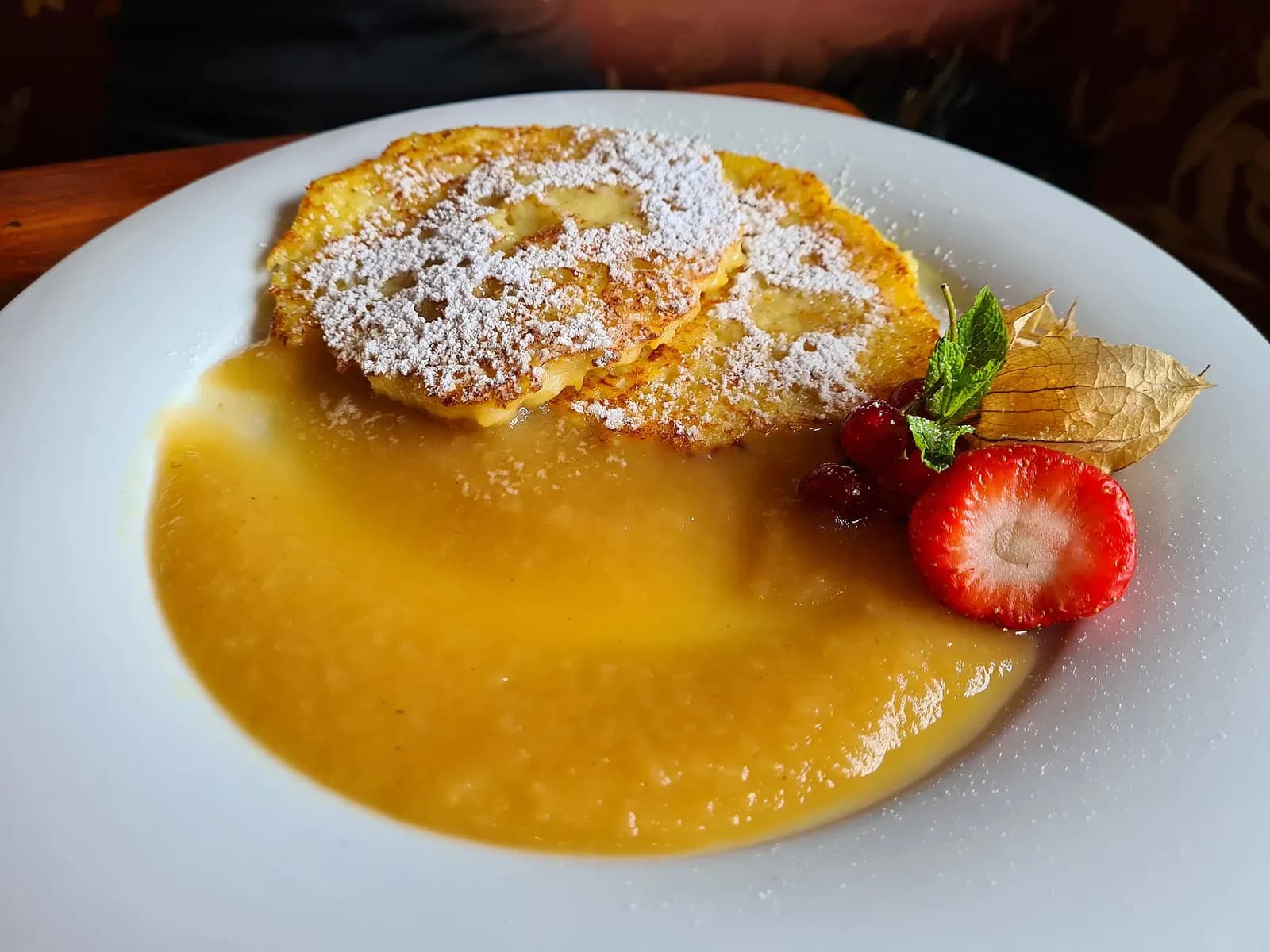
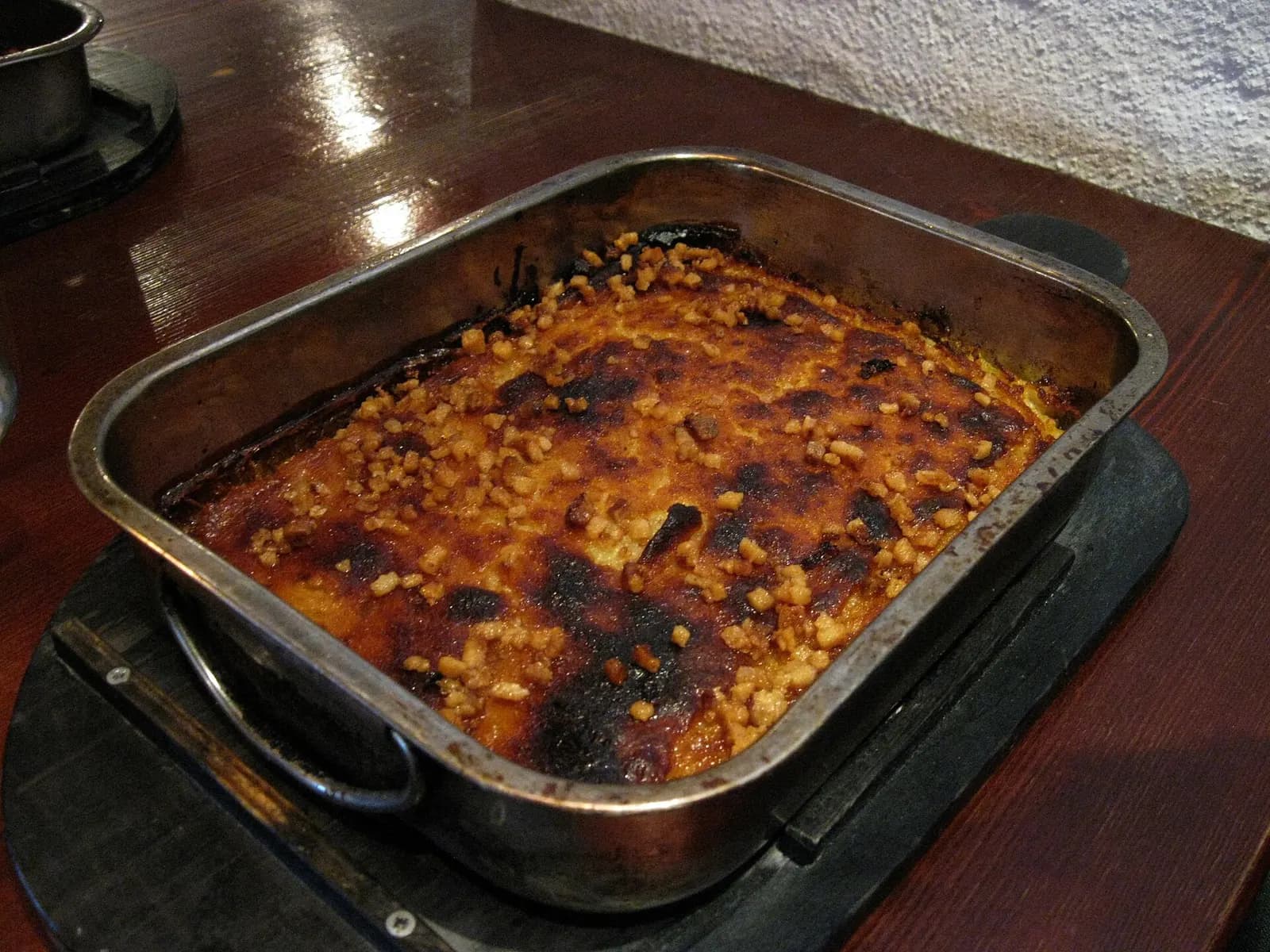
Probably the region's best-known dish. Raw potatoes are finely grated, stirred with buttermilk and baked over rendered bacon in the oven or a cast-iron pan until a brown, crisp crust forms. It comes with apple sauce or a compote of blueberries or lingonberries. "Getzen" is actually a whole family of dishes: there is also Heidelbeergetzen (a sweet batter with blueberries and cinnamon sugar), Mehlgetzen made with flour, Speckgetzen with bacon, and Semmelgetzen made from toasted bread-roll cubes.
Klitscher, Fratzen and Rauchemaad
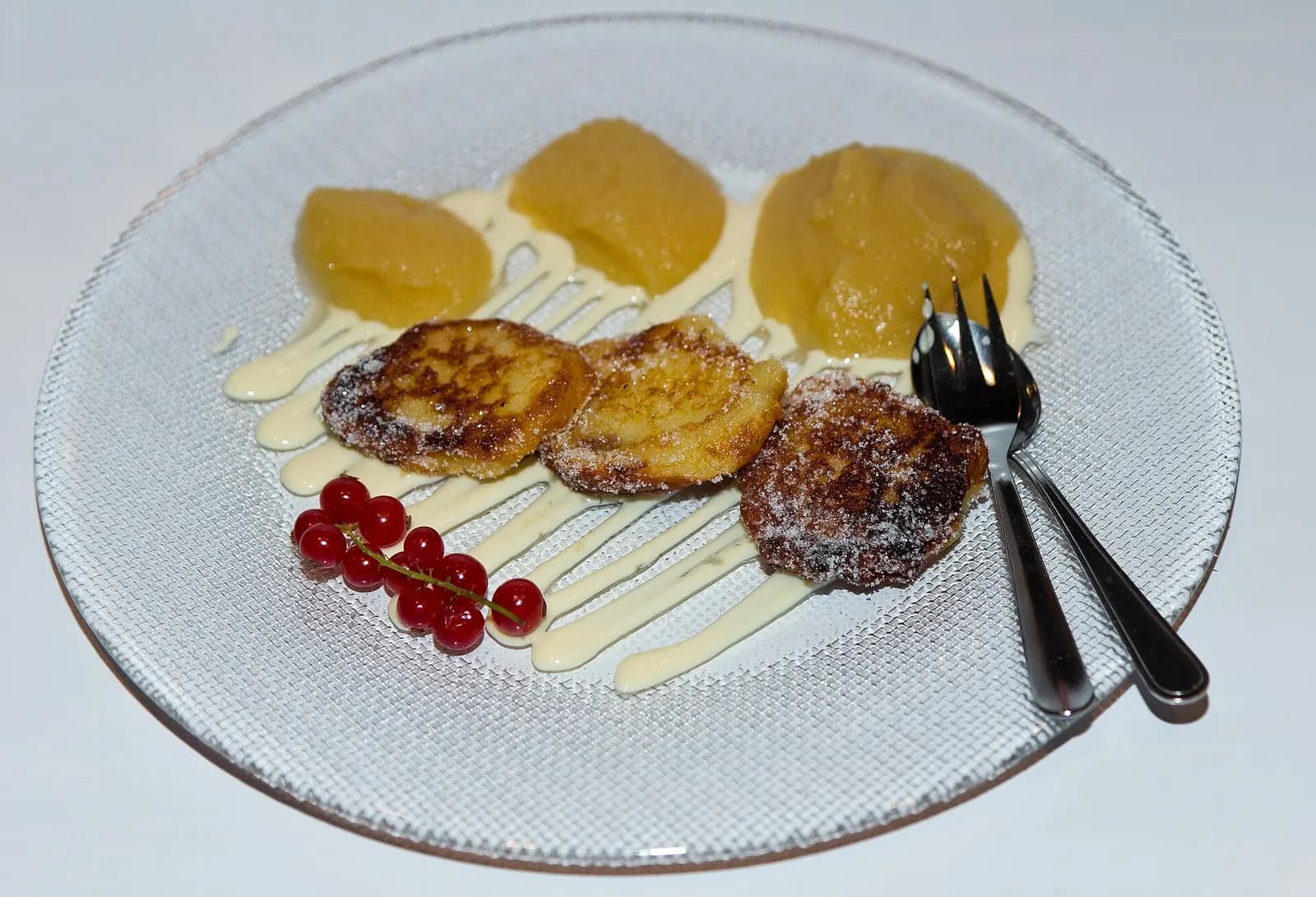
Depending on the village, potato pancakes are called Klitscher, Latschen or Fratzen in the Ore Mountains. They are fried from grated raw potatoes – savoury with sauerkraut, or sweet with apple sauce and sugar.
Rauchemaad (also Raacher Maad or Rauchemod) is made from cooked potatoes instead, often left over from the day before. They are grated, lightly salted and fried as one large cake in hot linseed oil, lard or clarified butter – on one side only, until golden. The cake is then turned out, brushed with butter and eaten warm, often with sugar and apple sauce or wild berry compote.
Griene Kließ un Schwammebrieh
Griene Kließ ("green dumplings") contain a high share of raw potato; the name refers to that raw dough. They are often filled with toasted bread cubes. In the Erzgebirge people say a Christmas dinner without these dumplings is not a proper Christmas dinner.
The classic partner is Schwammebrieh: a mushroom sauce or broth made from dried wild mushrooms, onion, butter and a little flour. "Schwamme" is the dialect word for mushrooms. The dish shows how this kitchen works: what was gathered and dried in autumn went into the pot in winter.
Other mushroom dishes
Besides the broth, you will find fried or boiled mushrooms, mushroom schnitzel and pickled mushrooms. In season, many inns put mushroom pans on the menu.
Neunerlei: the Christmas Eve feast
Neunerlei – Neinerlaa in dialect, literally "nine kinds" – is an old Christmas custom of the Ore Mountains, also known in the Vogtland and Egerland. On Christmas Eve, nine dishes or components are served. Exactly which ones is not fixed; every family has its own version. The meal is already mentioned in 1799 in the "Ur-Heilig-Obnd-Lied", an early Christmas Eve song.
Each component stands for a wish for the coming year. Frequently mentioned are:
- Bratwurst – for warmth of heart and strength
- Sauerkraut – so that life does not turn sour
- Lentils – so you never run out of small change
- Dumplings, carp or herring – for the big money
- Goose or roast pork – so that luck stays loyal
- Stewed fruit – so you can enjoy life
- Bread and salt – always on the table
The number nine is often given a religious reading: three times three points to the Holy Trinity. Today some inns in the Ore Mountains offer a Neunerlei menu during Advent, usually by advance booking only.
Cakes and sweets: Stollen, Eierschecke, Quarkkeulchen
Stollen
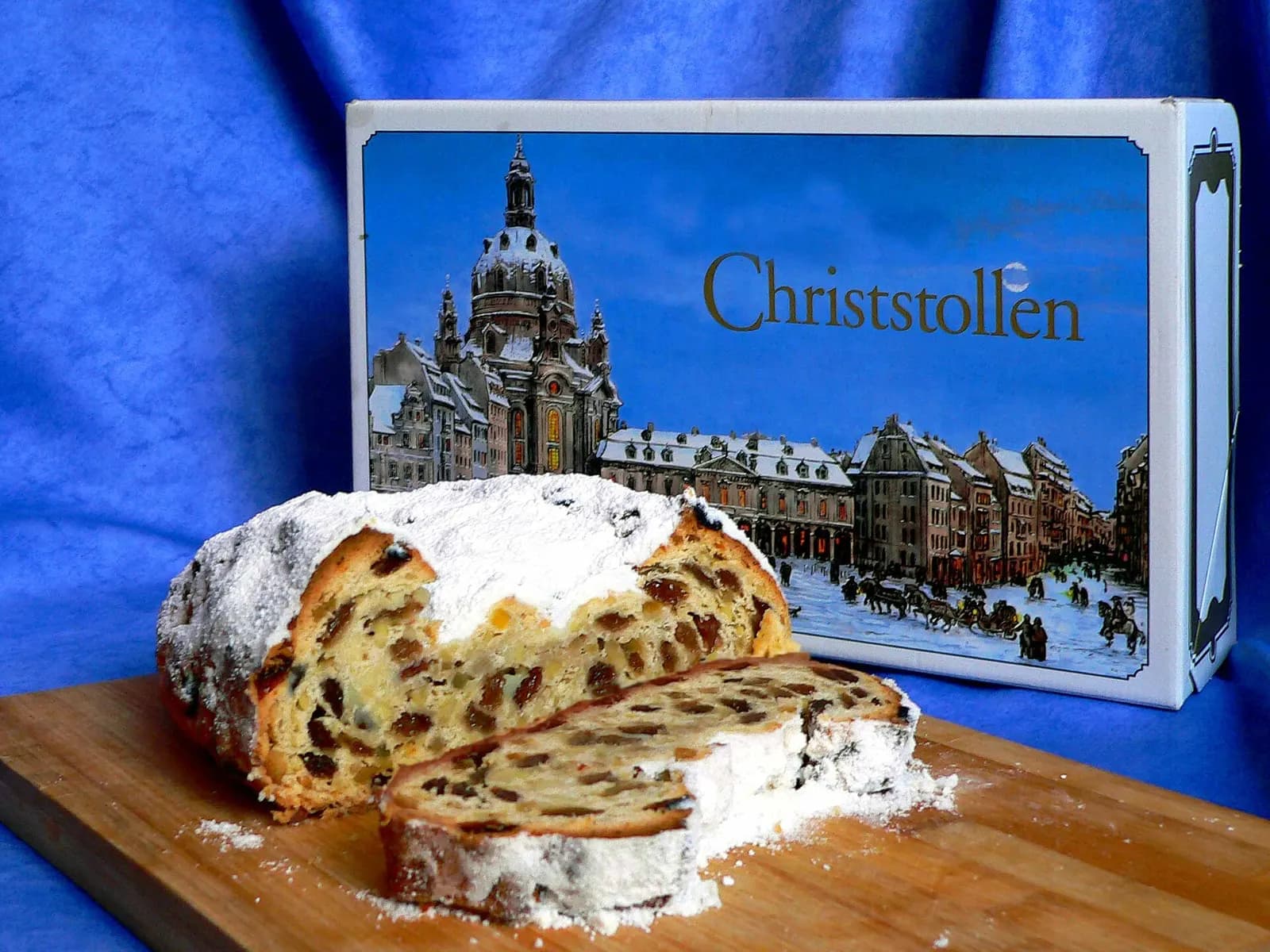
From the first Sunday of Advent, bakeries smell of butter, raisins and candied peel. Worth knowing: Dresdner Christstollen has been an EU protected geographical indication since 2010. Under that name it may only be baked in Dresden and twelve surrounding municipalities, with at least 50 parts butter, 65 parts sultanas, 20 parts candied orange or lemon peel and 15 parts almonds per 100 parts flour. Altenberg and Dippoldiswalde are outside that area, so local bakers in the Eastern Ore Mountains bake their own butter or Christmas Stollen, often from family recipes.
Eierschecke
This Saxon tray bake has three layers: yeast dough at the bottom, a quark filling in the middle and a light custard of eggs, butter and sugar on top. Besides the Dresdner Eierschecke there is the flatter Freiberger Eierschecke, made without quark but with raisins and almonds. The writer Erich Kästner once lamented that the rest of the world had never discovered this cake.
Quarkkeulchen
Quarkkeulchen (also spelled Quarkkäulchen) are small, flat cakes made from cooked potatoes, quark, egg and a little flour, flavoured with sugar, cinnamon and lemon, sometimes with raisins. They are pan-fried until golden and eaten warm with cinnamon sugar and apple sauce – a Saxon sweet dish that is just as at home in the Ore Mountains.
What is eaten when
| Dish | What's in it | When it's eaten |
|---|---|---|
| Buttermilchgetzen | raw potato, buttermilk, bacon | all year |
| Klitscher / Rauchemaad | raw or cooked potato, fat | all year |
| Heidelbeergetzen | flour, milk, egg, blueberries | summer, berry season |
| Mushroom dishes, Schwammebrieh | fresh or dried wild mushrooms | fresh mainly Sept/Oct |
| Griene Kließ | mostly raw potato | Sundays, holidays, Christmas |
| Stollen | yeast dough, butter, raisins, almonds | Advent and Christmas |
| Neunerlei | nine components, by family | Christmas Eve |
| Quarkkeulchen | cooked potato, quark, cinnamon | all year |
Summer: From roughly late June to August, wild blueberries ripen in the forests – in the Ore Mountains they are often called Schwarzbeeren ("black berries"). That means Heidelbeergetzen, blueberry cake and compote alongside the potato dishes.
Autumn: The main mushroom season is September and October. If you forage yourself, only take what you know for certain, and ask a mushroom advisory service if in doubt.
Advent and Christmas: Stollen, gingerbread and, on Christmas Eve, the Neunerlei. If you are coming for skiing or sledging, our guide to winter days in Altenberg has more ideas for the cold season.
Recipe: Buttermilchgetzen for four
A simple dish with few ingredients – just right after a day outdoors.
Ingredients
- 1.5 kg potatoes
- 500 ml buttermilk
- 1 small onion (about 50 g)
- 150 g streaky bacon
- salt, a little caraway to taste
- without meat: 3–4 tbsp butter or linseed oil instead of bacon
Method
- Preheat the oven to about 200 °C (conventional).
- Peel the potatoes, grate them finely and squeeze out a little liquid.
- Chop the onion very finely. Stir it into the potatoes with the buttermilk, salt and caraway.
- Dice the bacon and render it in an ovenproof dish or cast-iron pan.
- Pour the potato mixture over the bacon and smooth the top.
- Bake for about 40 to 50 minutes until the surface is golden and crisp. Timing depends on how deep the mixture is.
- Serve with apple sauce or blueberry compote.
Where to try Erzgebirge food in the Eastern Ore Mountains
Country inns and mountain lodges
Many inns in Altenberg, Geising, Dippoldiswalde and the surrounding villages serve Erzgebirge and Saxon home cooking: Sauerbraten (marinated pot roast) with dumplings and red cabbage, beef roulades, Getzen, mushroom pans and, in autumn and winter, game. In Saxony the Sauerbraten gravy is traditionally often thickened with gingerbread.
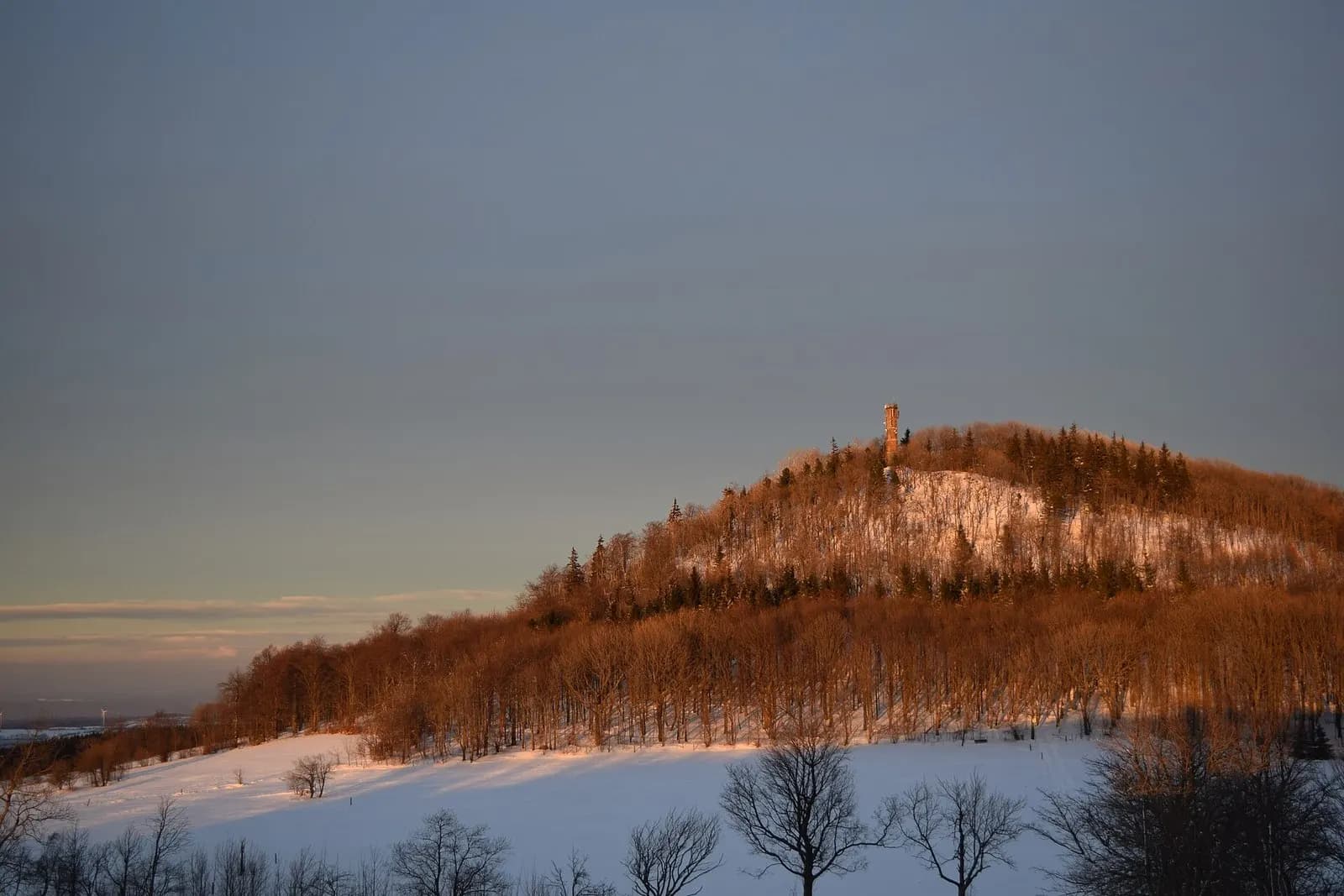
A stop is especially welcome after a hike. On the Geisingberg, around 820 metres high, near Altenberg, a mountain lodge (Bergbaude) serves walkers simple home cooking, next to the Louisenturm lookout tower. Check opening times before you head up, as there are fixed rest days. Routes up the Geisingberg and other summits are in our guide to hiking around Altenberg.
Beer from the neighbourhood
West of Altenberg, in Rechenberg-Bienenmühle, stands one of Saxony's oldest breweries: brewing rights passed to the Rechenberg estate in 1558. The historic buildings are now open as the Saxon Brewery Museum, while beer is brewed next door in a modern brewery. Museum and inn open on set days, so check the website before you go.
Regional produce and farm shops
If you want to buy sausage, cheese, honey or eggs directly from producers, the Regionales Sachsen portal run by the Saxon agriculture ministry lists farm shops and direct sellers by region.
Stollen and cake
During Advent, bakeries and cake shops in the area bake their own Stollen. Eierschecke and Quarkkeulchen, on the other hand, can be found all year in many cafés and bakeries – in Saxony they are simply part of afternoon coffee.
Eat well and stay in the Eastern Ore Mountains
The best way to get to know Erzgebirge food is on the spot: in a mountain lodge after a hike, at the bakery in Advent, or at your own stove. There are two places to stay:
- Altenberg: eight rooms at Dresdner Straße 10, each with its own bathroom and WC, seven for up to two guests and one for up to three, with a shared kitchen – from €70 per night.
- Dippoldiswalde: two apartments at Bahnhofstraße 15 for up to four or five guests, each with its own kitchen and washing machine – from €70 per night.
You book directly with us by phone or WhatsApp on +49 1514 1213283 or +49 1525 1644356. More ideas for your days are in our regional guide.
Sources and further reading (in German): Wikipedia on Erzgebirge cuisine, Neunerlei, Getzen and Dresdner Stollen; recipes for green dumplings with Schwammebröh and Buttermilchgetzen from the Chemnitz University of Technology Advent calendar.
Frequently asked questions
What is typical food in the Erzgebirge (Ore Mountains)?
Mostly potato dishes such as Buttermilchgetzen, Klitscher, Rauchemaad and Griene Kließ (green dumplings), plus mushroom dishes like Schwammebrieh. In Advent there is Stollen, and on Christmas Eve the Neunerlei.
What is Neunerlei?
A traditional Christmas Eve meal of nine dishes or components. There is no fixed list; common parts are bratwurst, sauerkraut, lentils, dumplings, goose or roast pork, herring and stewed fruit, with bread and salt on the table.
What are Buttermilchgetzen?
A bake of finely grated raw potatoes and buttermilk, cooked over rendered bacon until golden and crisp. It is usually served with apple sauce or blueberry compote.
Is Stollen from the Ore Mountains the same as Dresdner Christstollen?
Not by name. Since 2010 'Dresdner Christstollen' has been a protected geographical indication and may only be baked in Dresden and twelve surrounding municipalities. Bakeries in the Eastern Ore Mountains bake their own Stollen under other names.
When is mushroom season in the Ore Mountains?
Mushrooms grow for much of the year, but the main season is September and October. Only pick what you can identify with certainty, and ask a mushroom advisory service if in doubt.